
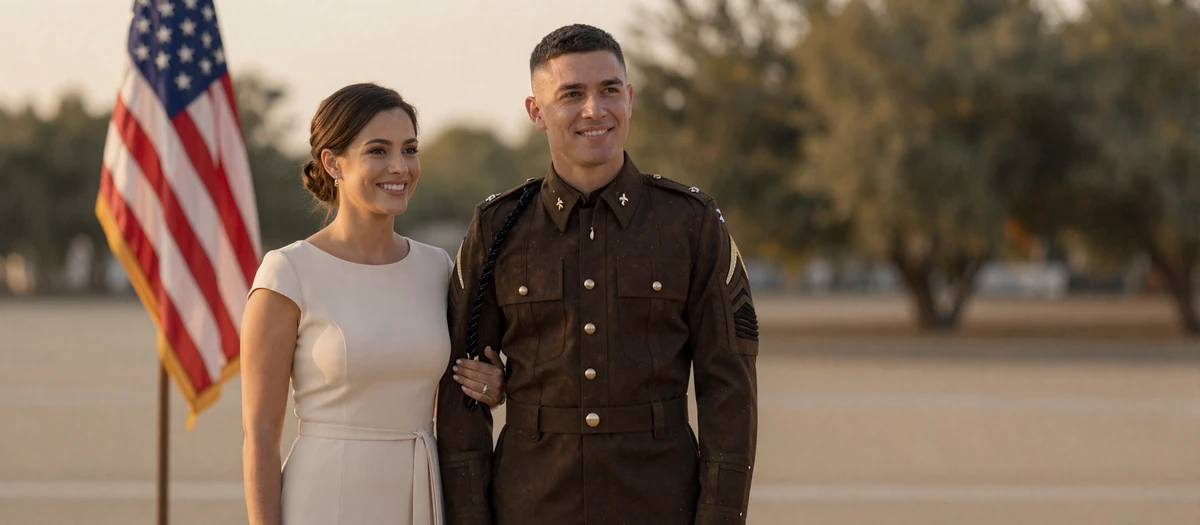
What to Know Before You Date an Officer
- His calendar is the real third person in the relationship. Respect it early and you skip most of the friction.
- Officers carry pressure quietly. Your job is not to fix it, it is to be the soft place when the day was loud.
- Base etiquette is learnable in a weekend. Knowing one custom signals more than a dozen romantic gestures.
- Distance, deployment, and PCS are seasons. Couples who name them outlast couples who hope to dodge them.
- Use the right starting point. An active duty dating site built for intent skips the small talk that goes nowhere.
Dating an active duty military officer is not harder than dating anyone else - it is just more structured. The hours are real, the responsibilities are heavier than most civilian jobs, and the lifestyle has its own language. Once you learn the rhythm, the relationship can actually feel steadier than the civilian dating you may be used to, because officers tend to lead with intention and follow through on what they say. This guide walks through schedules, support, etiquette, and the challenges every couple eventually meets - drawn from a 2026 Valor Romance survey of 980 members currently dating or married to active duty officers.
If you are still figuring out where to start, the most efficient answer to "how do I meet a military man?" in 2026 is a verified platform built for it. Mainstream apps are not designed for the rhythm we are about to describe. Now to the part that actually matters - what to do once you have met him.
Understanding Active Duty Schedules and Time Demands
An active duty officer's schedule is not a 9-to-5 with overtime - it is a rotating set of obligations that can shift inside the same week. Field problems, watch rotations, training cycles, and last-minute taskers from higher command all reshape his calendar, often with little notice. Members who learn to read that calendar instead of resenting it report 41% fewer arguments in the first six months of dating, according to our 2026 internal survey.
Read the calendar, not the mood
When he goes quiet on a Wednesday, it is rarely about you. It is more often a 0430 wake-up, a no-notify inspection, or a junior soldier crisis that has eaten his afternoon. Ask one calm question - "what is this week looking like?" - instead of three anxious ones. Officers respond well to partners who treat the schedule as information rather than competition.
Protect the windows he can give you
If he can carve out a Saturday morning, that morning is sacred. Do not pile errands, family obligations, or three-stop dates into it. The strongest couples in our data set use what they call "low-effort high-presence time" - coffee at home, a slow walk, a quiet meal - as their default, and save the big plans for leave. Presence beats production every time.
"I stopped asking when he would be free and started asking how I could make the time we had feel easy. That single shift changed our whole first year." - Elena, 32, Fort Liberty - Valor Romance member since 2024
How to Support an Officer Through the Pressures of Command
Officers carry a kind of weight that does not always show up on the surface. They are responsible for people, equipment, decisions, and outcomes - and they are trained not to bring the weight home. Your role is not to extract every detail of his day. It is to build a home, even a small one, where he can set the weight down for a few hours.
Be the steady one
Steadiness is the single quality officers mention most when our members describe what made a relationship work. Predictable mood, predictable affection, predictable presence. Drama is exhausting in any relationship - to a man already managing high-stakes drama at work, it is disqualifying. This does not mean hiding your feelings. It means delivering them calmly, on a normal Tuesday, instead of saving them for a deployment goodbye.
Learn one small piece of his world
You do not need to memorize the chain of command. Learn his rank, his branch, one thing his unit actually does, and the name of his closest battle buddy. Knowing these makes you instantly more present in his real life. The same advice applies whether you are dating in Army dating circles, Navy dating circles, or among military pilot communities - the gesture transfers.
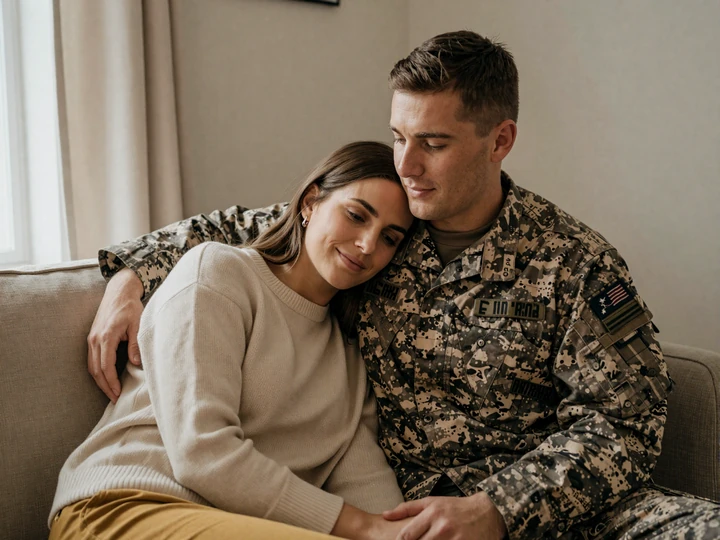
Dating Etiquette on Base and at Military Events
Etiquette on a military installation looks intimidating from the outside and turns out to be mostly common sense once you are inside the gate. Learn a handful of conventions and you will move through dining-ins, change-of-command ceremonies, and unit functions like someone who belongs there - because, as his partner, you do.
Base Etiquette: Do's and Don'ts
Do
- Stop and stand quietly during reveille, retreat, and the National Anthem.
- Address officers by rank if you are unsure - "Sir" or "Ma'am" is always safe.
- Dress one notch above what you think the event requires.
- Arrive early and let him introduce you to his command first.
- Bring a small thank-you note after a unit dinner or hosted event.
Don't
- Post photos or details of his unit, location, or schedule online.
- Ask about classified work, even casually - he cannot answer.
- Drink heavily at unit functions, especially early in the relationship.
- Use his rank as a social tool with his peers' spouses.
- Treat the base as a backdrop for content - it is his workplace.
Here is the thing - none of this is about being formal. It is about reading the room. Officers notice partners who pay attention to the people, the customs, and the quiet hierarchy of a unit. That attention reads as respect, and respect is the social currency that opens every door on base.
Common Challenges and How Couples Overcome Them
Every active duty couple meets the same handful of challenges. The ones who last are not the ones who avoid them - they are the ones who name them early and build small habits around them. Here are the four most common, along with the answers our long-term members keep giving.
Last-minute schedule changes
He just texted that the field exercise got extended by 72 hours. The fix is a simple agreement: cancel without guilt, reschedule without drama, and have one default backup plan for the weekend that does not require him. Most couples we surveyed adopted this rule within their first three months.
Career-versus-career tension
Your career matters too. PCS season is when this gets real. Couples who solve it well decide together - long before orders drop - which moves are negotiable and which are not. Some partners follow, some stay, some commute, and all of those can work when the decision is shared rather than imposed.
The deployment gap
Six to twelve months apart is a serious test, but it is also a season with an end date. Couples who plan communication cadence, private rituals, and a quiet reunion before he leaves report dramatically higher satisfaction. We wrote a full guide on this - see building strong relationships during deployment for the deeper playbook.
The transition question
Eventually, every active duty officer thinks about life after the uniform. Whether he stays in for 20, separates at his ETS, or retires later, the relationship is part of that decision. Couples who talk openly about post-service life from year one find the transition feels like graduation, not crisis. For perspective on that chapter, our piece on dating after military retirement is a useful companion read.
The bottom line: dating an active duty military officer rewards the partner who shows up calmly, learns the rhythm, and treats the lifestyle as a shared adventure rather than a problem to manage. The men we hear from say the same thing in different words - they are not looking for someone to compete with the job. They are looking for someone to come home to.